
Time To Increase The Pressure.
By Gordon Dimmack | July 21, 2025
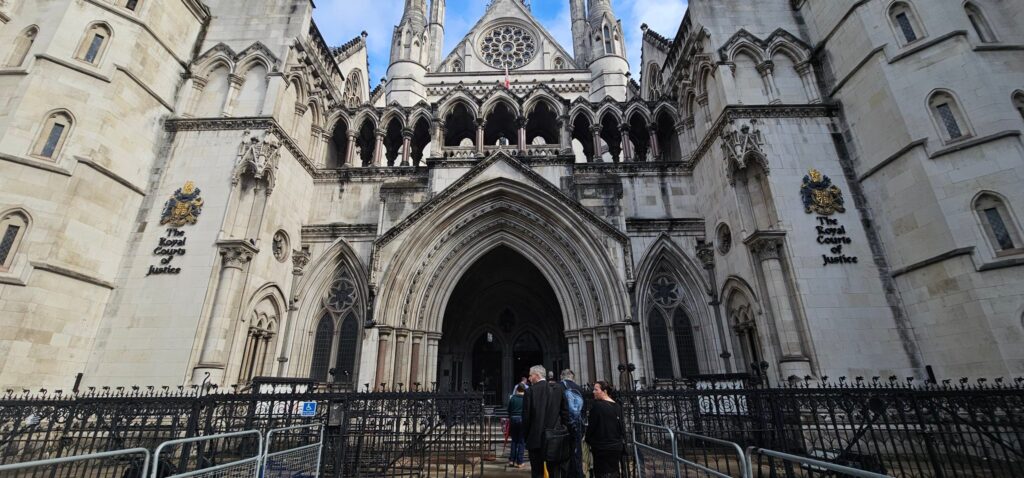
Today was supposed to be decisive. A High Court judge was expected to hand down a ruling on whether Palestine Action could challenge the government’s proscription of the group under terrorism legislation. But instead of a gavel, we got a delay.
Judge Chamberlain has withheld judgment until 30 July. Another hearing. Another week. Another can kicked down the road.
To the casual observer, this might look like indecision. But to those of us who’ve watched how this government operates—especially in the case of Julian Assange—it’s a familiar tactic: stall, delay, diffuse.
But here’s the crucial difference this time: they didn’t knock it back.
Last time Palestine Action applied for interim relief, the court rejected it in 90 minutes flat. No hesitation. The judgment looked like it had been written before the activists even entered the courtroom. Craig Murray said as much. The whole thing reeked of a pre-scripted fix.
But today was different.
Behind the procedural delays and classified evidence reviews, something shifted. Chamberlain didn’t throw the challenge out. He listened. He quoted precedent. He acknowledged the consequences.
🚨 Criminalised by Accident – and the Judge Admits It
And crucially, he admitted people could be criminalised by accident.
“There is a danger that they may unwittingly commit one of the strict liability offences… for example the offence in s.13 of wearing an item of clothing in such a way as to arouse reasonable suspicion that they are members or supporters of [Palestine Action].”
—Paragraph 99, High Court judgment, Ammori v SSHD (2025)
Strict liability means you don’t have to intend to break the law. You don’t even have to know the law exists. You just have to wear a badge, wave a flag, or hold a placard—and you could lose everything.
Let that sink in: Just being arrested—not charged, not convicted—could destroy your life.
If some of this sounds familiar, that’s because it is.
The arguments made in court today—about people being criminalised for peaceful protest, about confusion among police, about the chilling effect on speech—are the very same arguments we’ve raised in this blog over the past few weeks.
The incident in Kent where armed police threatened a woman over a Palestinian flag? That was referenced directly. The warning about people being prosecuted simply for wearing a badge or holding a cartoon? Echoed in Chamberlain’s own words.
We didn’t need classified evidence to see this coming. We just paid attention.
This case has gone from open-and-shut to open-ended. And that means there’s a window.
A window that wasn’t there before. A window the state hoped we’d miss. But we see it.
So here’s what happens now:
We don’t wait. We don’t pause. We don’t wring our hands hoping for justice to arrive like a lost Amazon parcel.
We intensify the resistance.
We use the next nine days to ramp up everything:
- More public pressure.
- More education.
- More protest.
- More visibility.
The judgment may be delayed, but our response can’t be.
Because if they kicked the can down the road—then we kick it back harder.
P.S. If you don’t think this is a big deal, if you think once this law is enshrined in stone and the precedent it sets won’t be used against something you care about in the future, then I urge you to read “First they Came” by Pastor Martin Niemöller – because you’re next!
Support the message? Share it.
One link. One friend. One moment.


