
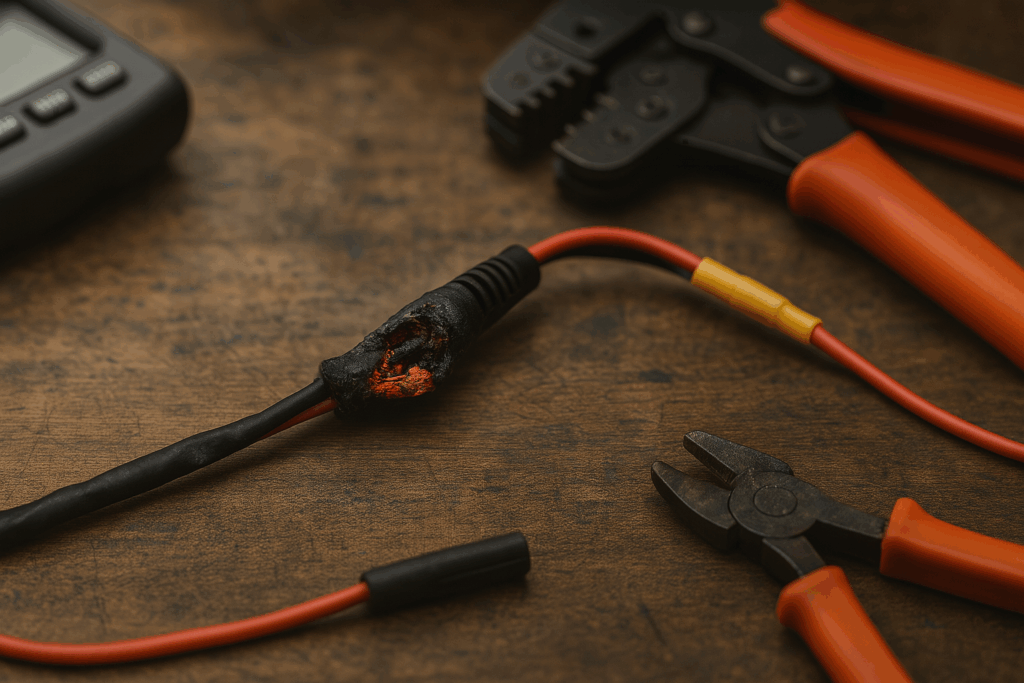
“At the beginning of this, when I was ordering parts, I thought getting an ebike conversion through inspection was going to be a doddle.”
I genuinely believed that. Bit of wiring, number plate bracket, a horn if I was feeling fancy… bish bash bosh, job done.
I didn’t realise I was stepping into a world of electrical errors, DVSA regulations, and near-housefires. If you’re thinking of converting a bike yourself, or building a business around it, let me walk you through the mess I made—because it might just save you from doing the same.
Mistake #1: 52V battery, 48V wheel
Technically? It can work.
Practically? If you know what you’re doing.
I didn’t.
What I ended up with was a really fast bike that kept cutting out at high speed with an “Error 08: Battery Under Power” message. Which, translated, means: you’re trying to do something the system isn’t designed for, and it’s having a meltdown.
Right there, you get a sense of how green I was when I started. Like a proper man, I thought “more power = more better.”
Wrong.
Mistake #2: Cooking the controller
I pumped too much juice through the controller. It ran fine—for about 40 or 50 miles. Then one day, it locked up completely, seized the back wheel, and I had to drag the bike four miles home like a stubborn dog that didn’t want to move.
Lesson learned? Cheap, mismatched components don’t just “make do”—they fail. And sometimes, dangerously.
Mistake #3: Upgrading without understanding
So I upgraded the controller. Upgraded the display too, so it could actually read the 52V battery properly instead of thinking it was still on 48V.
But here’s the problem: the lighting system on that controller was wired completely differently. I cobbled it together as best I could—and that’s when I almost set fire to my flat.
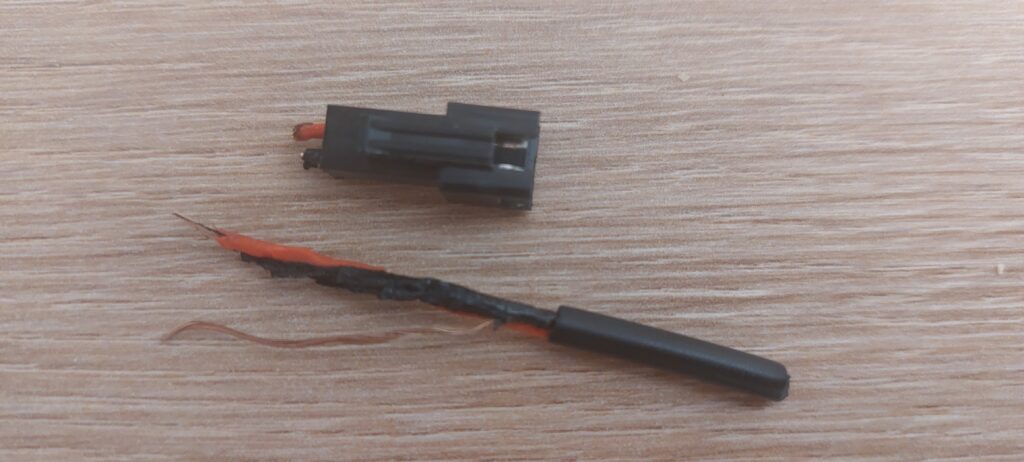
I shorted out the brake wiring in my living room. Literally. The parts melted. I’ve still got them—might even include a photo in the final build video. The smell of burnt plastic’s not something you forget.
Mistake #4: The smoking bag incident
After all that, I finally had a working bike. I’d done 50, maybe 100 miles. Then one hot day, I went out to the shops.
On the way back, I smelt burning rubber. Thought it was coming from outside.
It wasn’t.
Turns out the protective insulation I had wrapped the wires in were melting and the controller bag was very hot at the corners. I’d packed it all tight in one of those soft controller pouches—no airflow, no protection, just pure heat. If I’d brought the bike inside and gone for a nap, that thing could’ve gone up in flames and taken my flat with it.
I had no clue just how hot these controllers can get. You literally can’t touch them or you’ll burn.
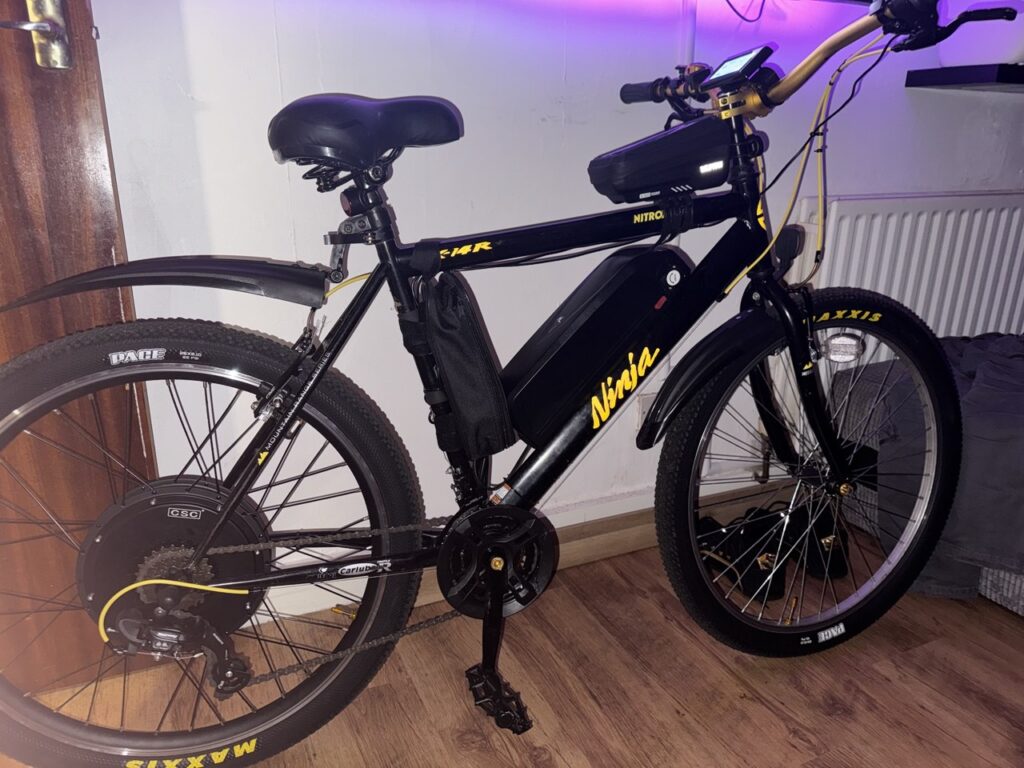
The harsh truth
There’s a lot of problem-solving involved in converting a bike. Especially if, like me, you start with a clunky old frame that was never meant for this kind of power. You’re dealing with frame clearance issues, dropout spacing, axle stress, component mismatches… and if you get any of that wrong, you’re risking serious injury—or worse.
At 1500 watts, your motor can rip the nuts clean off a poorly installed rear axle. If you’re not wearing a helmet when that happens? You’re not getting up.
The turning point
That’s when I realised this wasn’t about building a Deliveroo bike with a wing mirror and a roll of insulation tape. This was serious. The kind of speed and torque you’re working with puts these builds in moped or even motorcycle territory.
And the regulations are there for a reason—safety.
So I stopped winging it.
I ordered two more bikes. I started experimenting with proper builds, proper controllers, real enclosures, and hardware that could actually pass inspection. That’s how the Panther was born.
And that’s when Warrior Cycles started to take shape—not just as a side project, but as something that might one day help others do this the right way.
Support the message? Share it.
One link. One friend. One moment.


GET UPDATES FROM THE GARAGE
New builds. Road-legal conversions. All the lessons — straight from the workshop.