
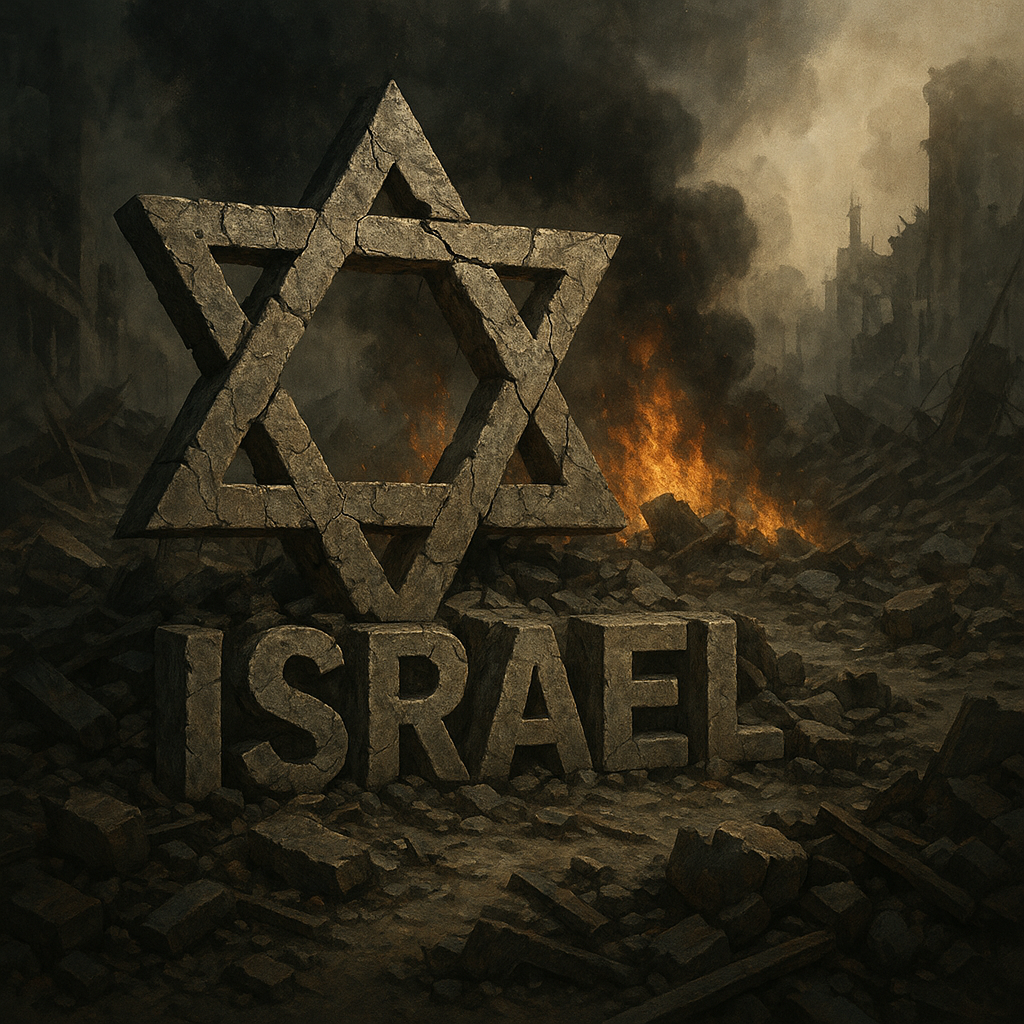
Collapse, Consequence, and the Reckoning Still to Come
In the last blog post, I talked about the end of Israel. But what comes next? What happens after a state like that falls — with all its weapons, secrets, and lies still intact? What about the aftermath?
1. Introduction: When a State Fell, the Silence Broke
Israel didn’t collapse in a single moment. It fractured. A slow, splintering descent from perceived invincibility to irrelevance, from occupation to implosion. And when the myth finally snapped, it wasn’t just tanks and missiles that followed — it was every secret Israel had tried to bury.
The aftermath wasn’t just political. It was spiritual. Psychological. Uncontainable. It was revolutionary.
Some said it was a liberation. Others called it a catastrophe. But whatever label history gave it, one thing was certain: the reckoning didn’t end with the state. It began with its fall.
And the death toll? The real one? It hadn’t even been counted yet.
Official figures — always qualified with “according to the Hamas-run health ministry” — were now looking insultingly low. Harvard-based modelling suggested up to 377,000 Gazans were missing.
Gee, I wonder where they could be?
When the mass graves were dug up, when the rubble was cleared, when the timelines were reconstructed — it wasn’t ten thousand dead. It wasn’t twenty. It wasn’t fifty. It was hundreds of thousands. A genocide hidden in plain view, under a media blackout, while the world debated terminology.
2. The Nuclear Orphans: When Loose Weapons Outlived the State
For decades, Israel refused to confirm or deny its nuclear arsenal. Everyone knew. No one acted. It had been the ultimate unspoken threat — a Samson Option held in reserve.
But what happened when there was no chain of command? No state? No accountable leadership?
Intelligence agencies scrambled. Panic spread through world capitals. The West, once Israel’s shield, raced to secure the very weapons they had allowed to exist in the shadows. Not because they cared about safety — but because they feared the fallout.
3. Settlers Returned ‘Home’ — And Found They Weren’t Welcome
From Brooklyn to Berlin, Tel Aviv’s dual passport class began flooding back into the countries they once left.
But they weren’t greeted with open arms. Some returned as victims. Others as pariahs.
Protests erupted. Documentaries aired. Student groups confronted them. They weren’t war criminals — not legally. But in the court of public opinion, the verdict was already in.
It was Vietnam vet syndrome in reverse: this time, the uniform was civilian. The war crimes had been livestreamed. And everyone had seen the flags on the social media bios. Everyone saw the Facebook posts.
It wasn’t pretty.
4. The Pandora Collapse: When the Secrets Spilled
When belief died, the secrets spoke.
Israel didn’t just fall. It detonated its own archive.
Decades of cover-ups — suddenly unravelled. No more military censorship. No more NDAs. No more “security concerns.” Just leaks. Mountains of them.
From IDF conscripts and drone operators. From snipers with GoPros. From Tel Aviv cafés and encrypted dropboxes and links on Telegram, all sent straight to The Hague.
“This is what we did in Rafah.”
“They told us to shoot anyone with a phone.”
“Here’s the drone footage — before they torched the place.”
WhatsApp orders. Audio recordings. Livestreamed confessions. Facial recognition databases. AI targeting logs. Israeli society didn’t just collapse — it hemorrhaged evidence.
And then came the skin bank.
Yes, skin bank. The Israeli National Skin Bank had quietly built the largest human skin stockpile in the world. It was used for burn victims, they said. Some donors were dead. Others weren’t. Consent was debated. Ethics, ignored. Palestinians, exploited.
They called it medicine.
The world called it something else.
Twenty years ago, Israelis had the highest rates of skin cancer in the world. They joked the sun was antisemitic. “Medicine” rectified the problem.
What had once been dismissed as conspiracy now flooded the timeline, backed by documents, receipts, and insider testimony. There was no DARVOing that.
You think that’s far-fetched? They bombed cemeteries. They shelled flour queues. They assassinated journalists.
They called it war. The world called it lunacy. Genocide.
5. Western Leaders Backpedalled — Fast
The same Western leaders who once stood behind Israel now pretended their hands were clean.
Archived tweets vanished. UN votes flipped. Speeches softened. Suddenly, the “unwavering support” sounded more like “misplaced trust.”
But survivors weren’t having it. Neither were the millions who’d been fighting for years. Some, decades.
Lawyers pressed charges. Journalists played old footage. Protesters turned up with receipts.
And in some cases, the confessions had already been written — by the politicians themselves.
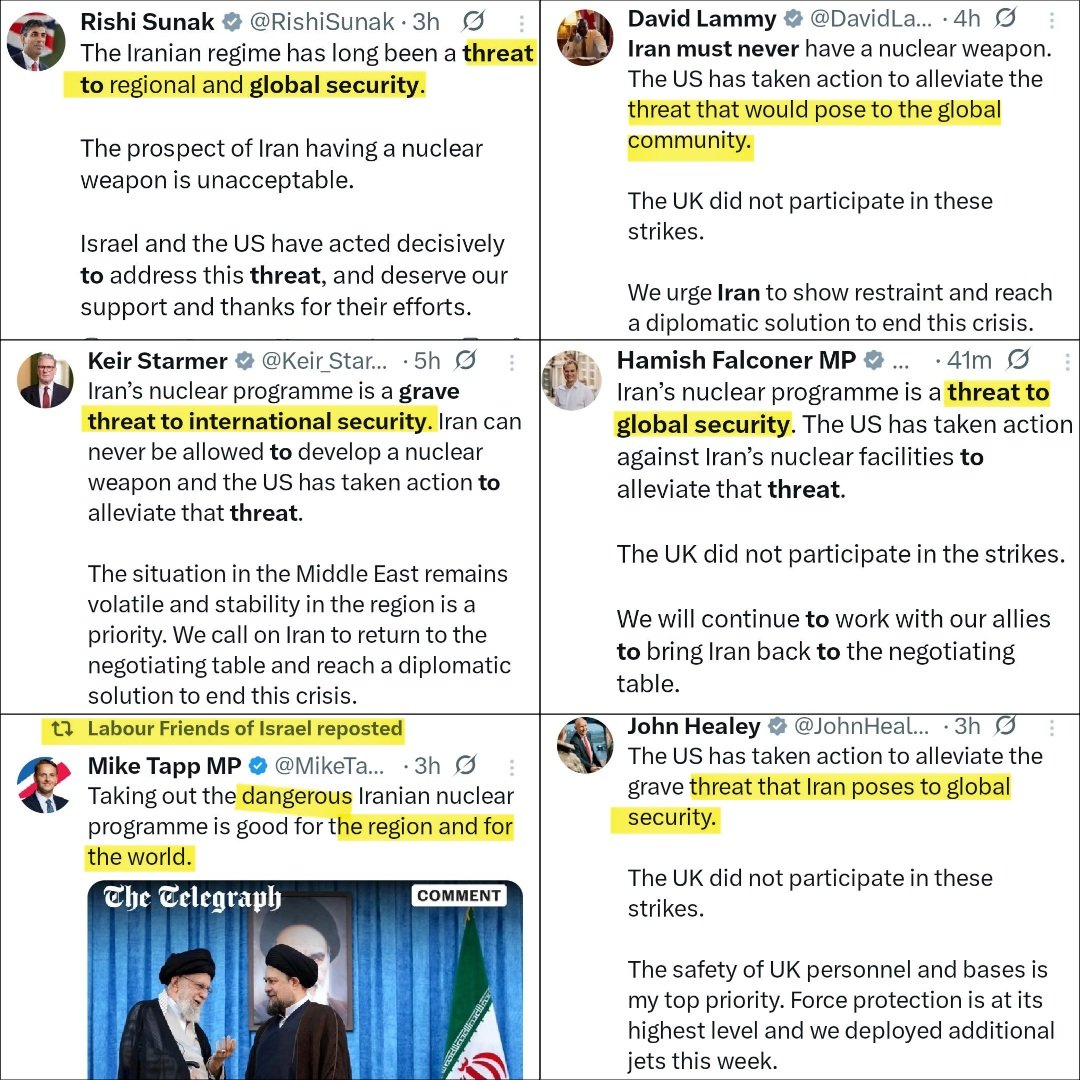
Every Western “leader” on script. They call it democracy. We call it theatre.
Every MP had parroted the same language: “threat to global security,” “grave threat,” “good for the world.” It was as if they had pre-written their indictments for The Hague. And when accountability came knocking, these tweets became Exhibit A.
Because they hadn’t spoken for their voters. They spoke for lobbyists. They recited scripts from the Foreign Office, Labour Friends of Israel, or US-aligned think tanks. We had the receipts. These weren’t leaders — they were weak individuals choosing the path of least resistance, chasing promotions and media airtime at the cost of human lives.
And when they stood trial, trying to explain why they backed a genocidal regime, I was there. And so were you.
6. From Ashes to Answers: The Rebirth Question
A single democratic state? A federated republic? Full Palestinian sovereignty? The possibilities were real — and fragile.
Justice demanded vision. But trauma demanded revenge. The global community stood at a crossroads: help build a future, or watch another tragedy unfold in the ruins of the last one.
No more rulers and pencils. The two state solution was never an option. It was a shield politicians used to allow Israel impunity for its expansion and crimes.
South Africa had offered a model. So did Rwanda. But both came drenched in blood. Palestine deserved better.
7. The Archive Will Be Decolonised
The wars didn’t end when the bombs stopped. They moved to the museum. The university. The library. The documentary edit suite.
Israel had long used science and culture to justify its myth. Biblical archaeology. Birthright tourism. Schoolbooks with missing borders. Museums built on ruins they claimed were theirs. DNA studies to decide citizenship. Historical trauma as political shield.
For decades. Generations. Archaeology had been used not to uncover history, but to manufacture it. Now, that archive was collapsing too.
Palestinians didn’t just reclaim land. They reclaimed memory. They rewrote textbooks. They renamed streets. They made films not from trauma — but from truth.
Because a land can’t belong to a people. A people belong to the land.
8. Conclusion: What Happened When the Curtain Fell?
Israel was never just a state. It had been an illusion built on silence, power, and myth.
Now the silence was broken. The myths were ash. And power was bleeding out on the global stage.
What came next would define not just the region — but the world that enabled it.
And history? It wouldn’t be kind to those who looked away. They tried to say they didn’t know.
But as a wise Onion Knight once prophesied, history showed they just didn’t bloody care.