
The Hardest Blow: Iran’s Retaliation, Israel’s Shock, and the Global Order Shaken
Iran’s response to Israel’s strikes over the last two evenings has shattered illusions—and possibly Western military minds. What was first called a “measured” retaliation has turned into one of the most significant direct hits Israel has ever received from a state actor. Some are already calling it the most intense strike on Israeli territory since the founding of the state.
And the scariest part? This wasn’t even the full force of Iran’s arsenal. Israel may feel like it got slapped in the face overnight, but the truth is, it was just a tickle. A taste of things to come if it continues to escalate a war it started.
An Unprecedented Strike
Iran’s barrage included older missiles like the Emad, Qadr, and Kheybar Shekan—models that date back decades. Cheap, mass produced weapons that act as pawns in battle, confusing and misdirecting the opponent for when the big pieces on the chess-board strike.
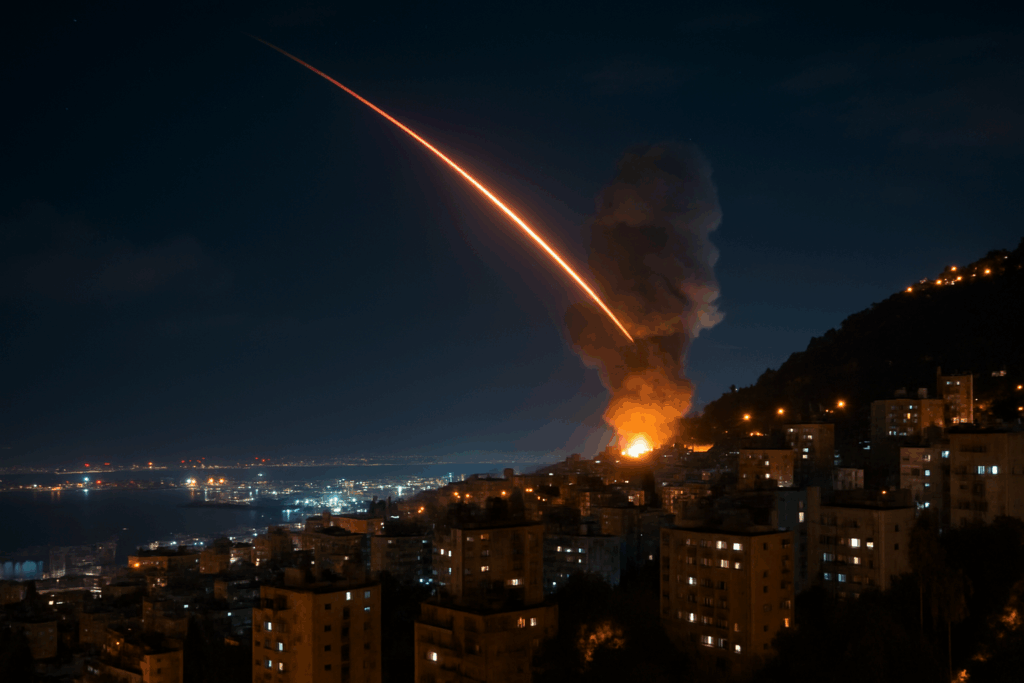
But among these swarms, there were a scattering of missiles that stood out: a handful of obviously newer-generation missiles that struck Israel with such impact, Israelis filming the hits from miles away screamed in horror.
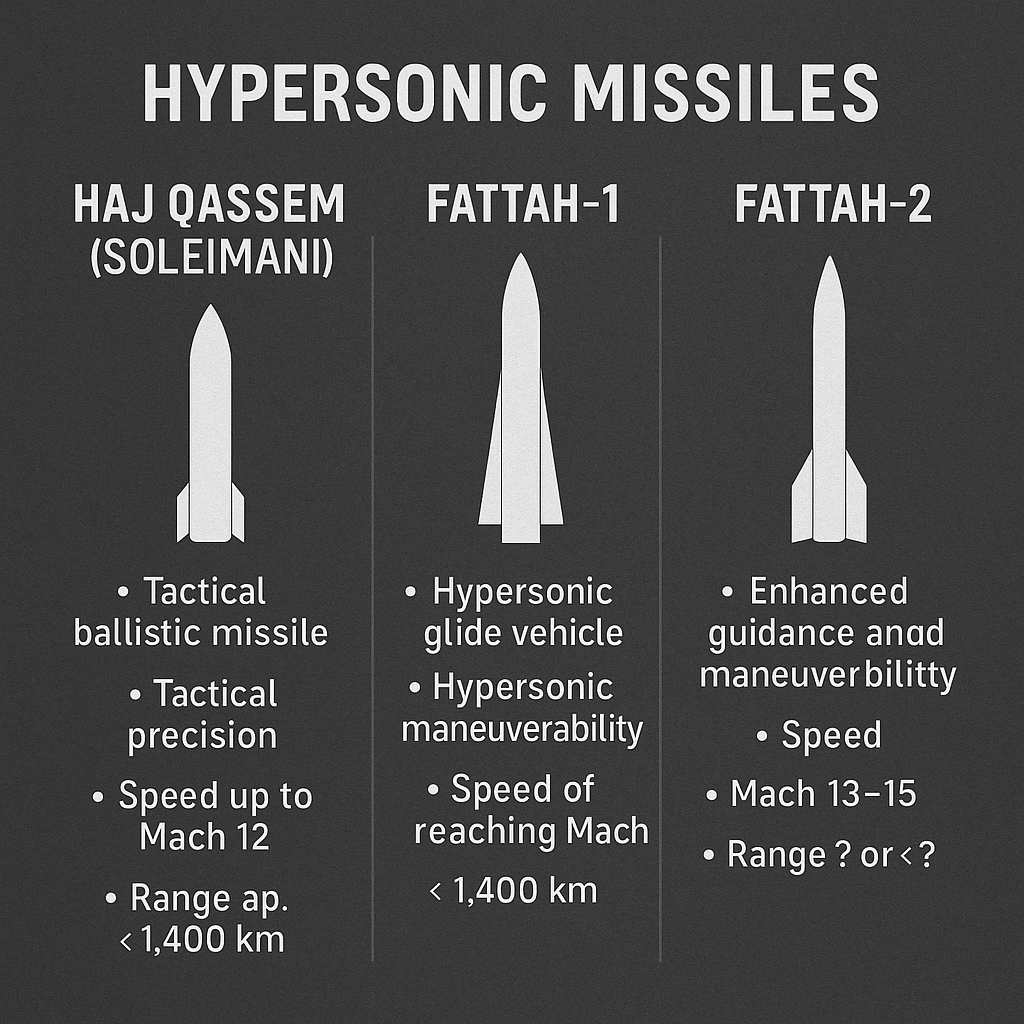
Haifa was hit with at least one missile of such astonishing speed and force, it reportedly knocked out power on impact. This may have been a Haj Qasem missile—capable of reaching Mach 12.
Mach 12 is over 9,000 km per hour. I’d be surprised if any defence system on Earth can even detect, let alone intercept, a projectile moving that fast. If confirmed, this would mark a seismic shift in modern warfare capabilities.
Also, if confirmed, it needs mentioning that this hypersonic missile, was just the baby of the bunch.
Technical Analysis of Missile Strike
“Mid-frame analysis of the above 6.6-second clip reveals an ultra-fast projectile entering the visible frame and impacting within less than half a second—suggesting a terminal velocity well beyond conventional subsonic or even standard supersonic missiles. The lack of audible warning, rapid compression of air, and near-instantaneous flash upon contact support the hypothesis of a high-Mach strike. Visual distortion preceding the explosion indicates possible shockwave interference, a hallmark of hypersonic entry. While precise speed can’t be confirmed without multi-angle telemetry, the projectile’s behavior is consistent with next-generation, high-velocity munitions.”
Professor Seyed Mohammad Marandi commented on this strike, saying that Iran is clearly saving its most advanced weapons for later, but the message was sent: “Wait until Iran empties its old stockpile. Then things will get more interesting for the genocidal regime.”
Israel’s Myth of Invincibility Is Cracked
This is a psychological and symbolic blow as much as it is a military one. For decades, Israel has projected the image of an untouchable power, guarded by the “Iron Dome” and backed by limitless U.S. support. That illusion was ruptured in full public view. Social media has been flooded with footage of incoming missiles, explosions in Tel Aviv, and residents fleeing to shelters.
The Haifa strike, in particular, sent shockwaves—not just because of its speed, but because of what it represented: Israeli air defences were either overwhelmed, ineffective, or bypassed. Possibly all three.
Global Ramifications
This isn’t just about Israel and Iran. The attack has rattled markets and stunned military analysts. If older Iranian missiles can get through one of the world’s most hyped defence networks, what does that say about the West’s readiness for a multi-theatre conflict?
Did you see Trump’s military parade? It wasn’t exactly the awesome spectacle you see when Russia, China or North Korea show the world how proud they are of their military might.
In military terms, planning a successful parade is much like organising a piss up in a brewery. And America just showed the world they were incapable of even that.
Unrest at Home
And the unrest isn’t just overseas. In the United States, anti-war sentiment has erupted into one of the largest protest mobilisations since the Iraq War. Estimates suggest up to five million people have taken part in counter-demonstrations across the country in recent days, flooding city squares and campuses with calls for a ceasefire, justice for Gaza, and an end to unconditional U.S. militarisation of the police force and ICE tactics.
From Trump’s MAGA base, who he had promised over and over to end these “stupid wars” in the Middle East, the message is loud: Americans don’t want this war, they’ve seen this film before, and they’re not staying quiet about it.
Sitting Ducks
If Trump had any hesitations about joining Israel in this war, rather than merely backseat driving it like they are, surely those hesitations will be compounded if he is watching clips from last night’s attack.
America has roughly 30 military bases and 40,000 troops in the Middle East. Iran proved last night they can hit every one of them with impunity. The optics of Americans coming home in body bags would no doubt cause eruptions of civil disobedience in the States. They’ve been here before. They know the score.
The cost imbalance is another massive issue: Iran can launch dozens of relatively cheap ballistic missiles, but intercepting just one of them costs up to a million dollars.
This flips the global military balance on its head—and it couldn’t come at a worse time for the West.
Tit-for-Tat on Energy Infrastructure
The escalation took a sharp turn last night when both Iran and Israel appeared to target each other’s energy sectors in a clear tit-for-tat exchange. Explosions rocked Haifa Port—one of Israel’s most critical energy and shipping hubs—within minutes Iranian facilities in Tehran were struck. Video footage shows large blasts near refinery sites on both sides, and while neither nation has officially confirmed the targets, the intent was unmistakable.
The message from both sides: your critical infrastructure is now on the table, and our cutlery is sharp.
The West’s Dilemma
While all this is unfolding, the UK has moved jets to the region for “contingency support.” The U.S. continues to shield Israel on the world stage, while Trump’s own ambassador to Israel admitted he had to run for shelter five times on the first night of attacks. And yet, Trump warned Iran of “even more brutal” attacks if they don’t accept a new deal.
It’s mafia tactics. But so far Iran hasn’t folded to the pressure. Instead, they stood firm and called the Israeli bluff. As I write this early Sunday afternoon, Iran have just sent another barrage of 50 rockets toward Israel which are in the air as type.
The Bigger Picture
“Fiat money monsters destroying themselves fighting over worthless s*** is a necessary purge in this 4th Turning.
Whoever survives this nonsense will be panic-buying Bitcoin.”
— Max Keiser
The Final Message
This is not just about bombs and missiles. It’s about global power, collapsing empires, and what comes next. The zombie economy of the West—kept alive by endless fiat money printing—may not survive a prolonged Gulf blockade. Oil prices are already volatile. The global economy is walking a tightrope. The Brent Crude price chart is going vertical as the situation escalates, and it shows no signs of slowing down. Iran have cancelled the planned talks with the U.S. this weekend. That may be because Israel killed so many of their nuclear scientists and the guys who were making the deal, though. Perhaps it’s that.
The West may be gripped by the spectacle of state-to-state warfare, but on the ground in Gaza, there is no such symmetry. There is only one side doing the dying, and it is not the one with fighter jets, tanks, and billion-dollar air defences. For Gazans, there is no Iron Dome—but they do enjoy the light show.
And now, as Iranian cities burn under airstrikes and Israel reels from the hardest blow in its modern history, the mask of Western dominance is slipping. Netanyahu yesterday boasted that Israel had “complete aerial superiority” over Iran, but last night’s events suggest Israel has no defence themselves against Iranian next-gen missiles. Whatever the actual scenario is on the ground, it seems Iran didn’t get Israel’s memo—or worse, they received it, tore it up, threw it on the floor and pissed all over it like a scene from Game of Thrones.
Iran will no doubt be emboldened by the last 48 hours, even as it withstands massive aerial bombardment. But for Israel, the message is clear: