
Chapter Two – How the CIA and Corporate Media Made Truth Optional
In 1981, shortly after Ronald Reagan was inaugurated as President of the United States, he gathered his newly appointed cabinet for their first official meeting.
Each member was asked what they had learned in the weeks since taking office. One by one, they responded—until it was the CIA director’s turn. That man was William “Bill” Casey.
Why the head of the CIA had a cabinet-level position at the time is, frankly, a cause for concern—as you’ll see shortly.
Casey’s response was recorded by Reagan administration staffer Barbara Honegger, and later relayed by several others. Asked what he had learned and what his main objective was, Casey allegedly replied:
“We’ll know our disinformation campaign is complete when everything the American public believes is false.”
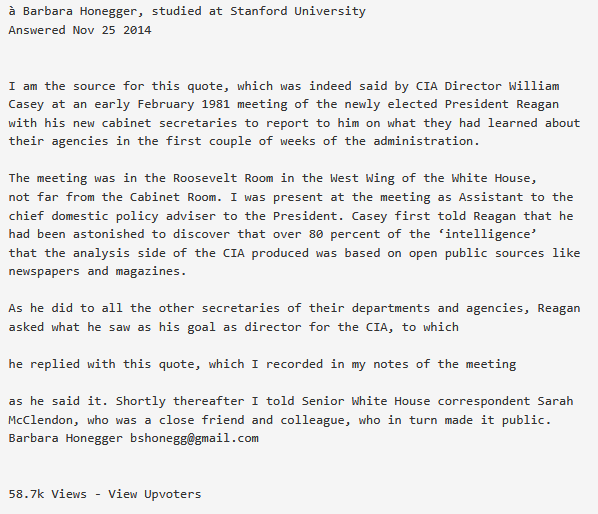
Let that sink in. If true, it’s one of the most revealing quotes ever uttered by a U.S. official. And if it isn’t true, it’s certainly been prophetic.
Journalism Was Supposed to Prevent This
The press helped ignite the American Revolution. That’s why the First Amendment wasn’t just about religious freedom—it was written to shield speech and protect journalism.
In the years after independence, newspapers boomed. Journalism became a cornerstone of American society. It existed not just to inform, but to watchdog the powerful and keep governments honest.
The founding generation knew what unchecked authority looked like. That’s why a vibrant, independent press was seen as vital to democracy.
But somewhere along the line, the press stopped being a watchdog—and became a lapdog.
From Public Service to Profit Machine
In 1983, 90% of U.S. media was owned by 50 companies. By 2014, that figure had collapsed to just six.
That’s not journalism. That’s consolidation. Six corporations now control the overwhelming majority of what Americans read, hear, and see—across television, radio, newspapers, and digital platforms.
These are not civic institutions. They are shareholder-driven, debt-fueled entities whose first obligation is to Wall Street, not the public. They don’t exist to inform you. They exist to extract value—from your attention, your trust, and ultimately, your silence.
Journalism didn’t just die. It was bought, gutted, and paraded around in the skin of its former self.
Bill Casey’s Toolkit: Disinformation and Destabilisation
Before becoming CIA director, Bill Casey was already well-versed in manipulation. He was reportedly under investigation for attempting to engineer a coup in Libya. According to journalist Jack Anderson, Casey helped spread false reports that Gaddafi was trafficking slaves to Mauritania—an effort to stir unrest and undermine his rule.
Decades later, in 2011, Gaddafi was toppled in a NATO-backed regime change operation. Libya, once Africa’s richest country, collapsed into chaos. Within months, slave markets re-emerged. The story Casey had falsely weaponised in the ’80s had now become a bitter, horrific reality.
My Interview With Ray McGovern
I spoke with former CIA analyst Ray McGovern, who worked under Casey’s tenure and has frequently cited this quote. While he wasn’t in the room during the 1981 cabinet meeting, he has often repeated the story as an accurate reflection of Casey’s mindset and CIA culture at the time.
Ray began by describing the corporate media’s role in manufacturing consent, calling the New York Times “Pulitzer Presstitutes” for their Russiagate coverage. Then he recounted the Casey quote:
“When Reagan came into office in January 1981, he held a cabinet meeting a few weeks later. Bill Casey was there. When asked what he was working on, he said:
‘We’ll know our disinformation campaign is complete when everything the American people believe is false.’”
Barbara Honegger claimed to have heard the quote firsthand. Ray McGovern, though not present, has repeatedly referenced it as credible and emblematic of Casey’s view of media and information.
A Call from Anderson Cooper
In 2006, Ray publicly confronted Donald Rumsfeld over the Iraq War lies. The clip went viral. Shortly after leaving the venue, his phone rang.
“Hello, is this Mr McGovern?”
“Yes.”
“This is Anderson Cooper.”
“Hi Anderson.”
“You’re making quite a stir down here in Atlanta. Let me ask you—weren’t you afraid?”
Ray told me the story with a smirk:
“Here’s the heir to the Vanderbilt fortune—on CNN—asking me, a former CIA analyst, if I was afraid of asking a few questions. So I said:
‘It was a real high, Anderson. I did my homework. I knew he’d either have to lie or admit the truth. You might want to try it sometime.’”
That single exchange tells you more about the state of the press than a hundred panel discussions ever could.
The Face of CNN—and the Face of the Problem
Anderson Cooper didn’t rise through the ranks by exposing the powerful. He became the face of CNN by not doing that.
But here’s what most people don’t know: Cooper used to work for the CIA.
While studying at Yale, he interned at Langley. As he wrote on his own CNN blog:
“I was 19 years old… I applied for a summer job at the CIA… I was a political science major and was interested in serving my country.”
That wasn’t a conspiracy theory. That’s his résumé.
So when Ray McGovern—a man who spent decades briefing U.S. Presidents—got asked if he was “afraid” to speak truth to power, it wasn’t a random question. It was a tell.
It revealed the real job description of people like Cooper: to avoid asking real questions. To play the role of journalist while functioning as a mouthpiece. A legacy media brand with legacy ties to the intelligence world.
So What Are They Afraid Of?
Today, journalists at the top of the food chain aren’t afraid of getting the story wrong. They’re afraid of getting the story right—especially if it makes their advertisers, owners, or friends in Washington uncomfortable.
If journalism were functioning properly, Rumsfeld would’ve been asked those same Iraq questions in every interview before and after Ray confronted him. He wasn’t.
If journalism were functioning, Anderson Cooper wouldn’t be the one holding the mic. He’d be the one answering questions about his ties to U.S. intelligence.
Instead, we get actors. Anchors. PR agents in makeup. Professional gatekeepers.
But every now and then, someone like Ray slips through—and reminds them what the job used to be.
Support the message? Share it.
One link. One friend. One moment.


