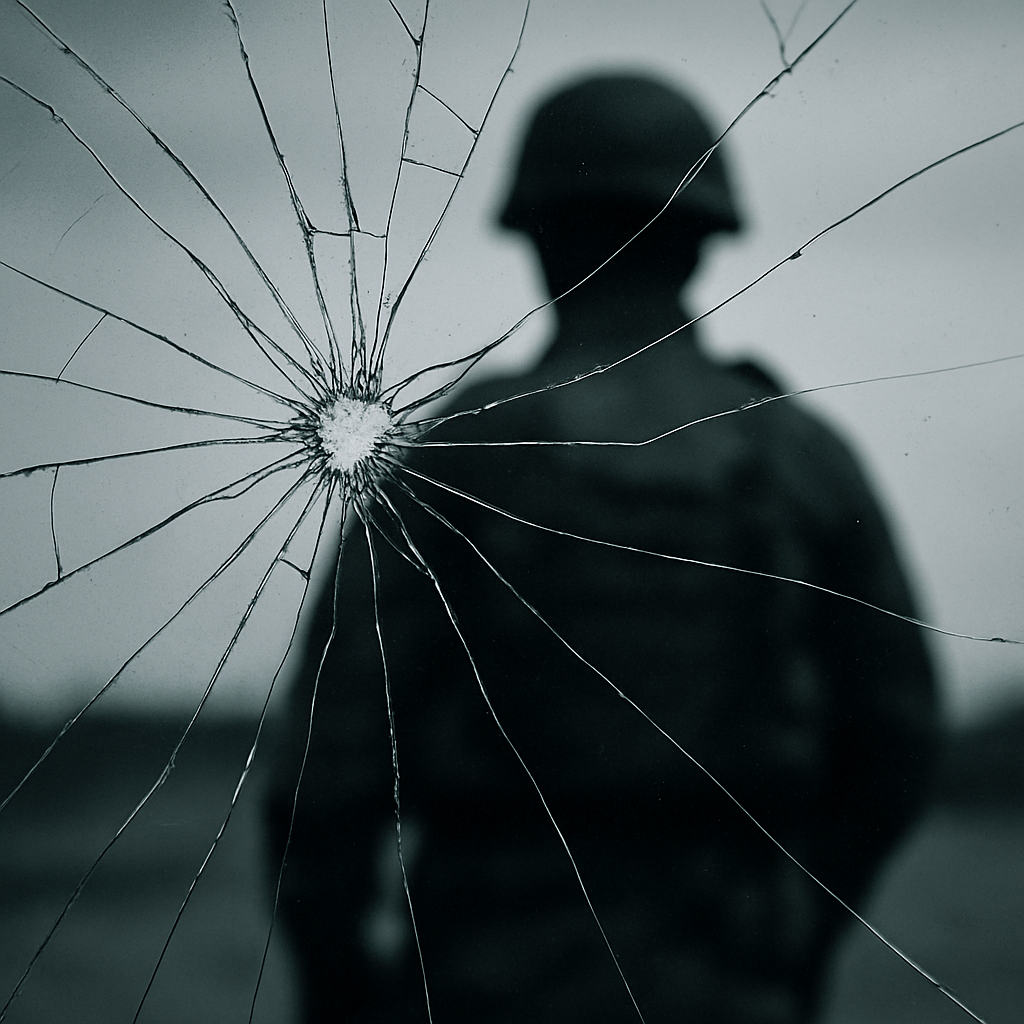
There are moments that don’t feel historic when they happen. A policeman in London calmly arresting a 66-year-old woman for holding a sign. A soldier in Israel snapping a selfie beside rubble. A bureaucrat stamping a paper that leads to someone’s deportation or incarceration. They look mundane. Routine. Lawful. But they’re not.
These are the snapshots of future museum exhibits. The kind children on school trips stare at decades later, asking their teachers, “How did people let this happen?”
There are some who will answer: “Because the bubble was profitable.”
An economy of occupation has become an economy of genocide.
Tel Aviv Stock Exchange increased value by 179%, $70 billion in last month alone.
Arms & tech companies profiteer off how Israel has perfected surveilling & killing Palestinians throughout this genocide.@FranceskAlbspic.twitter.com/GlmB2INibp
That will be bad enough. The thought of being part of a machine that murders children because it paid the rent will be a heavy burden to bare. But the most haunting answer of all will be: “Because they were in a bubble and following orders.”
The Cracks in the IDF
Reports are now emerging of a surge in suicides among Israeli soldiers. Not rumours—but cases documented by Israeli outlets, brought up in the Knesset, and pointedly ignored by the IDF leadership. Lawmakers say the army recorded 38 suicides across 2023 and 2024, and 21 more already this year. That’s a 70% spike in recent months, and the military’s response? It says it won’t release new data until 2026.
One soldier, an 18-year-old Paratrooper trainee and lone soldier from Norway, recently died from a self-inflicted gunshot wound. Others have been critically injured under similar circumstances. Military police are investigating. But the pattern is clear: something is cracking.
We do not celebrate this. Suicide is not justice. It’s not accountability. It’s a last act of desperation when the weight of what someone’s done or witnessed becomes too much to bear.
And it is not unique to Israel.
The Bubble of National Myth
Most Israelis have grown up in an information bubble so airtight it could pass a nuclear test. They are told their army is moral, their state is under siege, their violence is always defensive. But that bubble is leaking.
Footage from Gaza. Testimonies from survivors. Arrests abroad.
Last week, two Israeli soldiers were briefly detained at a music festival in Belgium on suspicion of war crimes. The complaint was filed by the Hind Rajab Foundation, a Brussels-based legal and humanitarian group named in memory of five-year-old Hind Rajab, who was killed in Gaza after being trapped in a car surrounded by Israeli tanks. Her final, terrified phone call to the Red Crescent became one of the most harrowing symbols of the war.
The foundation was created not just to honour her memory, but to pursue justice for all civilians killed in Gaza. It works alongside international legal networks to bring war crimes complaints against individuals—not just leaders, but soldiers—by using universal jurisdiction laws in countries like Belgium, Brazil, Argentina, and Chile. They’ve tracked down and filed complaints against over a thousand IDF soldiers so far.
But their work goes far beyond legal cases. They help document civilian casualties, preserve evidence for future prosecutions, and support bereaved Palestinian families. They are building a living record so the world cannot look away—and so those responsible are eventually held accountable. And if soldiers can no longer travel safely through Europe, what does that say about how the world sees this war?
And when that truth gets through? When someone realises they killed a child, not a terrorist? When they learn their orders came from men already being investigated for crimes against humanity?
That’s when the mind breaks. The psyche collapses. The bubble bursts. And some cannot live with what they see.
Britain’s Bubble Is Still Inflating
Here in the UK, our bubble is still largely intact. Our press runs defence briefs dressed as headlines. Our police arrest priests and pensioners under terrorism laws for simply supporting Palestine Action. And like their counterparts in Israel, they think they’re doing the right thing. They think they’re keeping the peace.
But history will not see it that way. That image of a British policeman arresting a 66-year-old woman for holding a sign—that image will one day hang in a museum.
This policeman doesn’t know it yet, but his photo will be in a museum one day. He’s not protecting the public. He’s arresting an old lady for opposing genocide. History will remember this.
He doesn’t know it now. He’s in a bubble. Just following orders. Keeping calm and carrying on. But the cost of that obedience doesn’t disappear with time. It just takes longer to come due.
What Are They Preparing For?
Right now in Britain, police are being asked to arrest peaceful protesters—priests, pensioners, even journalists—and charge them under terrorism legislation for holding signs, sharing solidarity, or speaking seven words: “I oppose genocide. I support Palestine Action.”
They are being trained to treat truth as a threat and power as the only victim worth defending.
And that raises the question:
If this is what they’re asked to do this week—
What will they be asked to do next month?
What will they be asked to do next year?
Because history is very clear on one thing: once a state criminalises speech, conscience, and protest, the next targets are never the guilty. They’re the defiant. The inconvenient. The ones who remember.
And here’s the truth: British police officers are not supposed to follow every order blindly. They take an oath to uphold fundamental human rights and are bound by the College of Policing’s Code of Ethics — which obliges them to challenge and refuse unlawful or unethical instructions. International law, since Nuremberg, makes it clear that “just following orders” is no defence for enforcing injustice. If an officer is told to arrest someone for holding a sign that says “I oppose genocide. I support Palestine Action,” and they carry that out anyway — then the shame is theirs. The duty to disobey immoral orders is not optional. It is foundational.
The Long Arc of Reckoning
This is a genocide. That’s not rhetoric. That’s the legal term. Deliberate mass killing. Starvation as a weapon. Targeting of children. Criminalising humanitarian aid. The flattening of entire towns and villages. And for those enabling it—whether with bombs, silence, or spin—history is not forgiving.
Israel is starting to feel that weight now. The suicides are not anomalies. They are the human cost of a collapsing myth. And if Britain continues down this road, if we keep criminalising those who speak out while shielding those who drop bombs, we will feel that weight too.
History has seen this before. In the final days of the Third Reich, as Hitler lay dead in his bunker, thousands of Germans took their own lives. Not out of resistance or courage, but because the myth they had built their identity upon had collapsed. They couldn’t live with what they’d served. That same psychological reckoning is beginning to unfold again.
Maybe not today. Maybe not in five years. But eventually, someone will look at a photo from 2024 or 2025 and ask, “How could they not see?”
And the answer, once again, will be: “They were in a bubble.”
Until it burst.
If you or someone you know is struggling with thoughts of suicide, please reach out. In the UK, you can contact Samaritans anytime, free of charge, at 116 123 or visit samaritans.org. You are not alone.