
Almost Ready for Inspection
It’s been eight months since I set myself the mission of turning an ordinary bicycle into a 28-mph, UK-road-legal e-bike — a proper moped under the DVSA’s new rules. A full conversion, built by hand, from scratch.
On paper, it sounded simple enough: convert a bike, pass the inspection, stick a number plate on it.
The reality was something else entirely.
When I started this project, I didn’t know a thing about e-bikes. I knew bikes — I’ve been fixing them since I was a kid — but motors, controllers, wiring, throttles, fuse ratings, phase wires, lighting circuits… that wasn’t my world.
Eight months later, after melted wires, smoking controllers, mistakes, restarts, and emails with the DVSA that could fill a novel, The Panther is finally, genuinely, almost ready for inspection.
But getting here took a journey that taught me more than I ever expected.
Realising I’d Built a Death Trap
The original plan was innocent enough: convert my old mountain bike, ride it legally, job done.
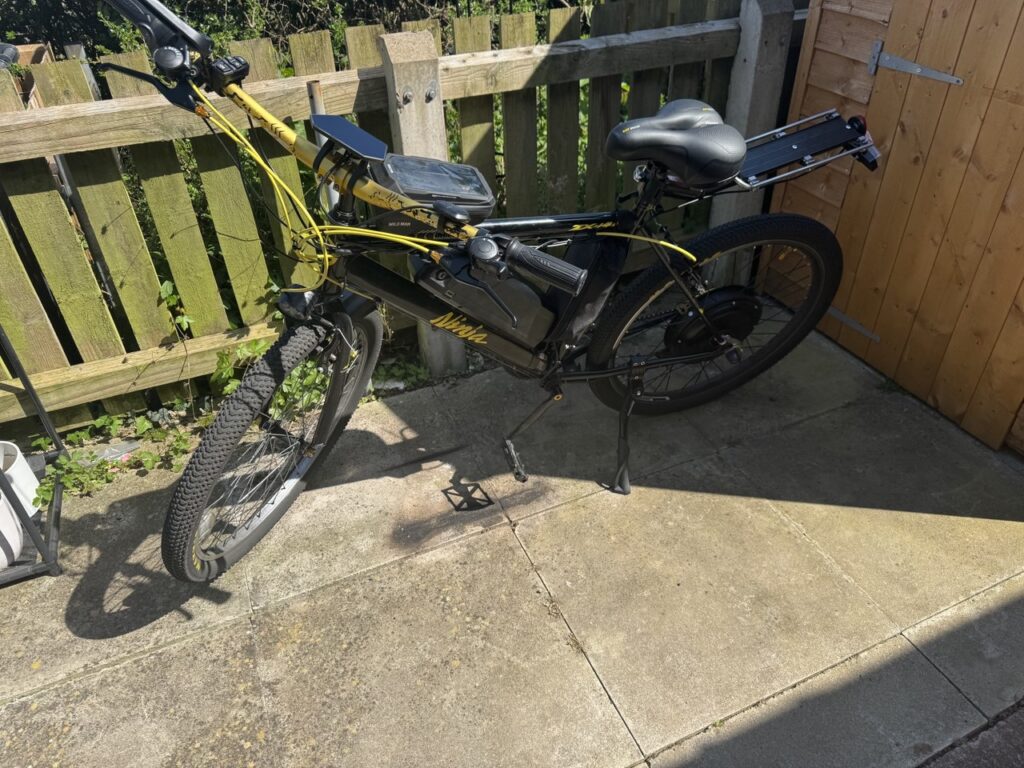
And I did convert it — slapped a 1500-watt motor on it, paired it with a 52-volt battery, took it outside for a spin… and immediately realised I’d built something that really had no right to exist on public roads.
The thing hit 40 miles an hour on the flat. But the bike wasn’t built for that.
- No suspension
- Thin wheels
- V-brakes older than the Industrial Revolution
- A frame designed for weekend rides, not warp speed
At 15–20 mph, it was fine. At 40 mph, it wasn’t an e-bike — it was a catapult with handlebars.
And that was the moment the penny dropped: the government’s regulations actually make sense.
Painful words to type, but true.
I’ve spent years rolling my eyes at the so-called nanny state. But when you’re sat on a bicycle doing 40 mph with nothing but hope and V-brakes keeping you alive, you suddenly understand why speed limits exist.
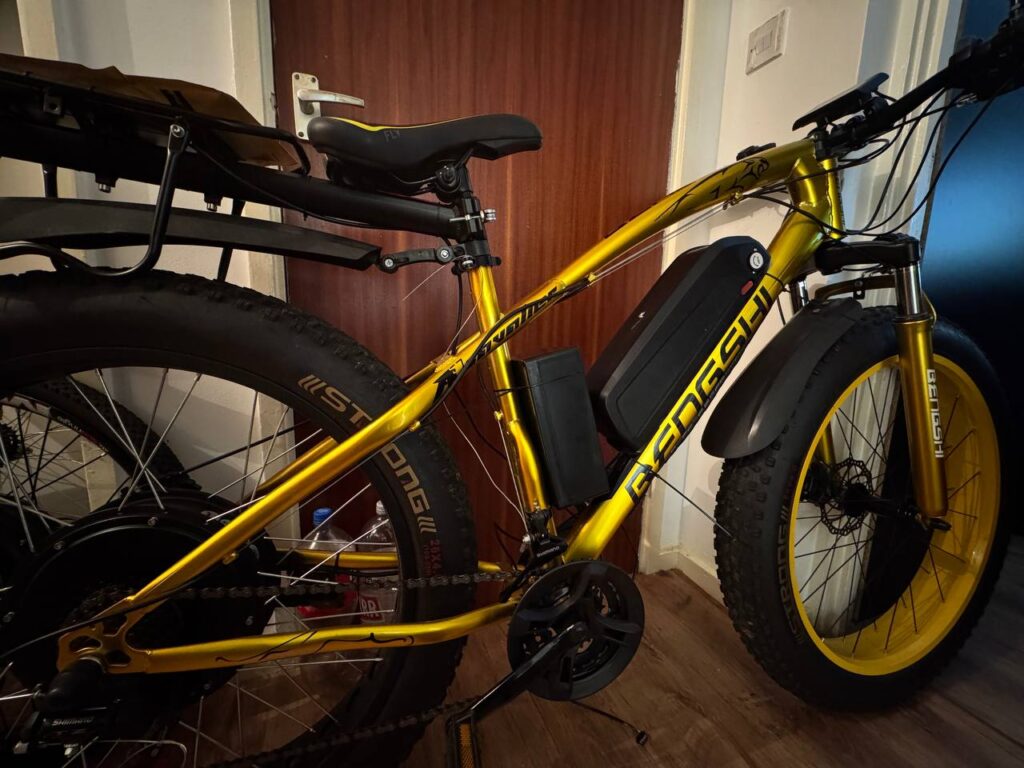
So I scrapped that plan, bought two different frames, tested them, and settled on The Panther — because it’s sturdy, it’s built like a moped, and it actually has the right geometry for a 28-mph machine.
And crucially: anything over 28 mph is now classed as a motorcycle. Different licence. Different test. Different requirements.
If you want a moped, you stick to 28 mph. No shortcuts.
Which brings us to the biggest nightmare of the whole project…
The 28-Mile-An-Hour Nightmare
On paper:
“Limit the bike to 28 mph.” Easy.
In reality?
Hell.
The DVSA made it absolutely clear, in multiple emails, that a moped must have a permanent, non-adjustable top-speed limit.
Meaning:
- no adjustable controllers
- no hidden menus
- no limiter wires you can unplug
- no displays with password-protected speed modes
- no “I’ll behave, I promise” settings
- no cheap generic controllers that can be unlocked in five seconds
If it can go faster — even in theory — it fails.
And every single cheap Amazon/eBay kit fails on that point immediately. They’re all soft-limited, all adjustable, all hackable, and all dangerous if pushed.
And that’s before we get to the fire hazard problem.
Cheap controllers are dangerous
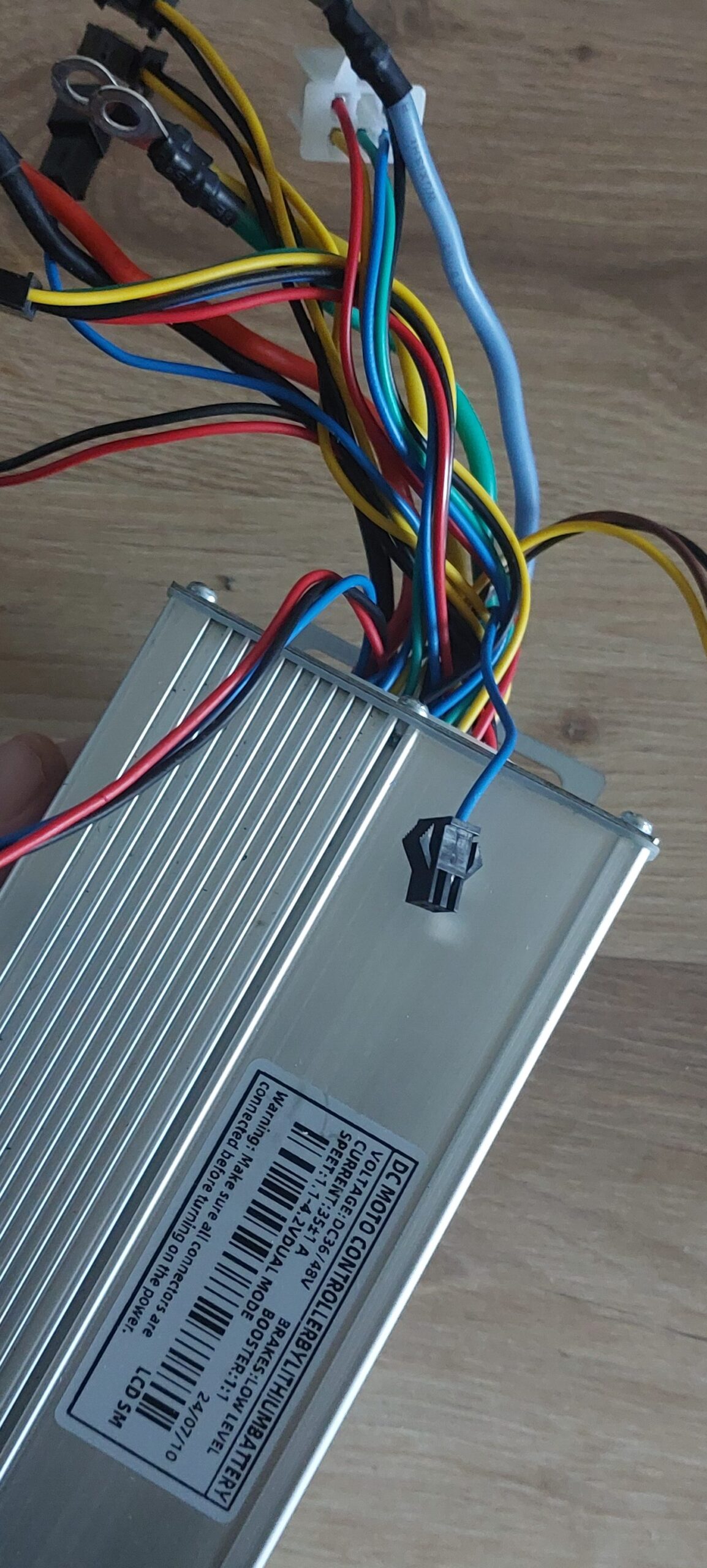
The budget controllers that come with £199 “conversion kits” are junk:
- terrible heat dissipation
- thin wiring
- no airflow
- components that overheat under load
- logic boards that run hot enough to fry an egg
In my case, one literally started smoking in the bag.
These are the controllers people think they can take to the DVSA.
Let me save everyone some time:
There is no universe where a controller stuffed in a nylon pouch passes inspection.
And honestly? After nearly burning my house down twice, I get why.
The Only Real Answer: A VESC-Based Controller
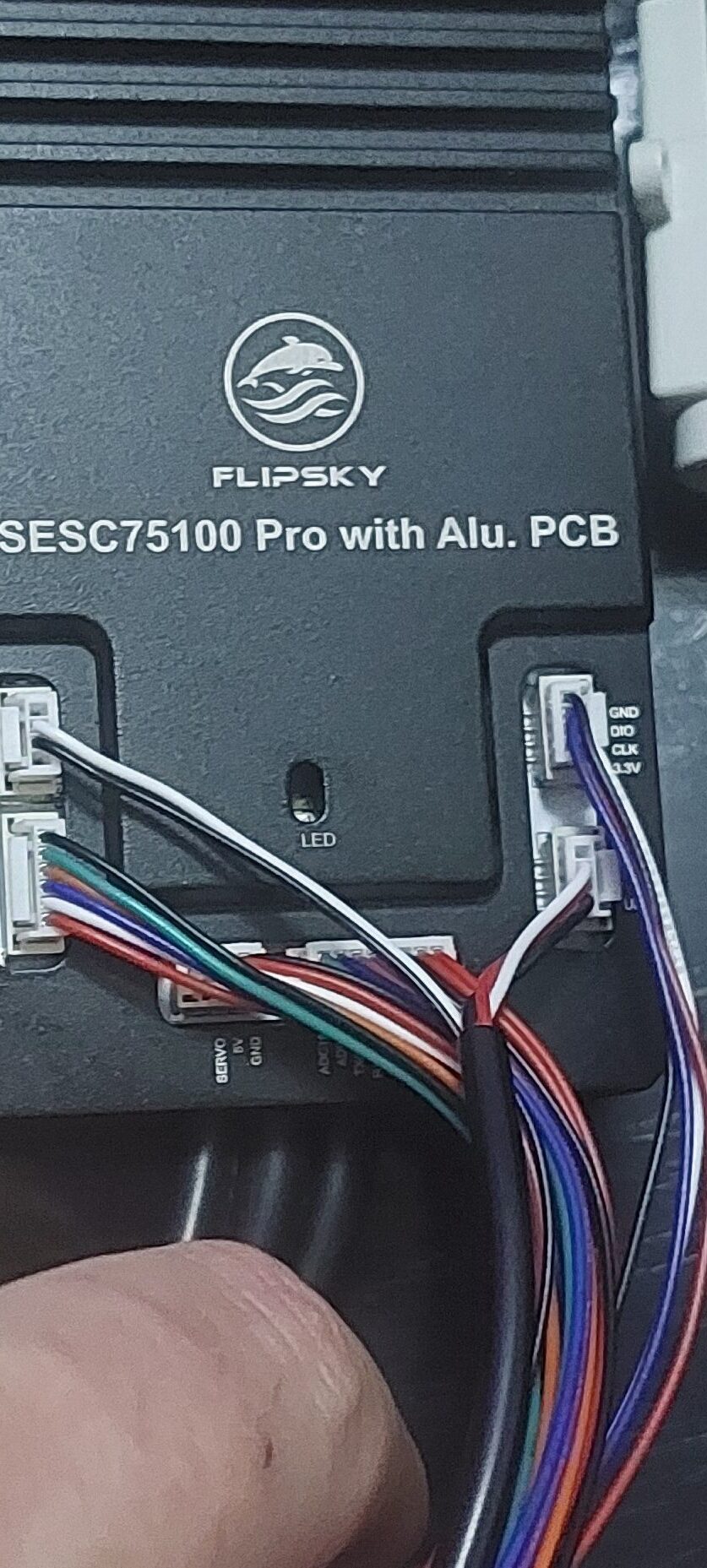
After months of back-and-forth with the DVSA, poring through regulations, eliminating dead ends, and rebuilding the bike three times, the conclusion was obvious:
You need a VESC-based controller with a permanent, hardware-defined 28-mph limit.
This solves everything:
- no hidden settings
- no adjustable limits
- no secret menus
- proper heat management
- proper wiring
- proper safety
- proper compliance
Pair it with a compatible display and the system enforces the limit at the hardware level — exactly what the DVSA requires.
And unlike the cheap kits, VESC doesn’t melt into a puddle when asked to do its job.
Building the Panther the Right Way
With the controller sorted, the next challenge was wiring the entire system properly.
And let me say this clearly:
Before this project, I didn’t know a thing about electrics. Nothing. If you’d asked me what a phase wire was, I’d have assumed it was something to do with the moon.
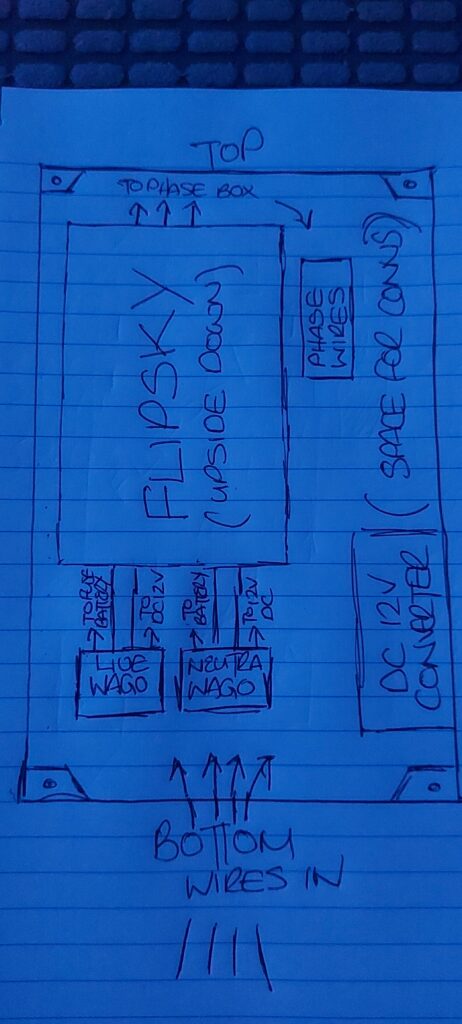
So I sat down with a notebook and started sketching the wiring system by hand. It looked like the scribblings of a man being held hostage by JST connectors — but it worked.
Because the Panther needed:
- a proper hard electrical box
- correct wire gauges
- a proper main fuse
- XT60/XT90 power connectors
- WAGO blocks or soldered logic connections
- a separate 52V–12V converter for the lights
- proper airflow and heat management
- waterproofing that actually works
- and clean inspection-friendly routing throughout
None of this exists in cheap kits. Which is why they catch fire. And why the regulations are written the way they are.
The Panther now has a system that isn’t just functional — it’s safe. It looks like something built by someone who knows what they’re doing.
Even though I didn’t eight months ago.
The Final Steps Before Inspection
Right now, the Panther is wired, powered, and fully alive. The VESC is mounted, the connectors are clean, the wiring is finished, and everything works exactly as intended.
We’re down to just two final jobs.
1. Wiring the Lights with a Dedicated DC–DC Converter
The lighting system must run from its own 12-volt converter — not straight from the battery. We’re just waiting on the final converter and one last 8-pin JST connector to tidy it into the system.
Once that arrives, it drops into the electrical box, gets fused and mounted — job done.
2. Adding the VIN Number
The bike needs a VIN plate before the DVSA will even look at it.
And yes — you can choose your own VIN. It’s a 17-character mix of letters and numbers, with rules:
- no O, I, or Q (they look like numbers)
- nothing offensive
- nothing rude (sadly)
I did attempt to sneak something cheeky in there, but apparently the DVSA doesn’t share my sense of humour.
The VIN is already chosen — it just needs stamping and mounting to the frame.
And that’s it. When those two things are done, we can go back to the DVSA and get a test date.
What This Journey Taught Me
If you’d asked me eight months ago what I thought of the government’s e-bike rules, I’d have told you they were paranoid, over-the-top nonsense written by people who’ve never sat on a bike. I was firmly in the camp of: “Soon you’ll have to show them a photo of your arsehole just to buy some groceries.”
Now?
I get it.
I melted wires. I overheated controllers. I built a 40-mph death trap. I saw firsthand how easily cheap parts can catch fire.
And I realised the rules aren’t written for the handful of people who take this seriously — they’re written for the thousands who don’t.
For the people who buy a £150 kit, stuff the controller in a bag, and send it down a hill at 40 mph wearing shorts and flip-flops.
The regulations aren’t the enemy. Physics is. And you either respect it, or it will teach you a lesson quickly.
This project kicked the arrogance out of me. It replaced it with actual engineering discipline. And the Panther — finally — reflects that.
It’s safe. It’s legal. It’s built properly. And it’s nearly ready to stand in front of a DVSA inspector and get its pass certificate.
Eight months ago, I wanted power. Now?
I want approval. Because that’s how you build something that lasts.
And that’s exactly why the Panther is going to pass.
Support the message? Share it.
One link. One friend. One moment.


